Torvani Pest Defense delivers specialized pest control service in Scottsdale designed to stop venomous desert pests before they penetrate the architectural envelope. For homeowners searching for reliable pest control near me, our focus centers on perimeter physics, crack isolation, and micro-exclusion rather than broad indoor pesticide saturation.
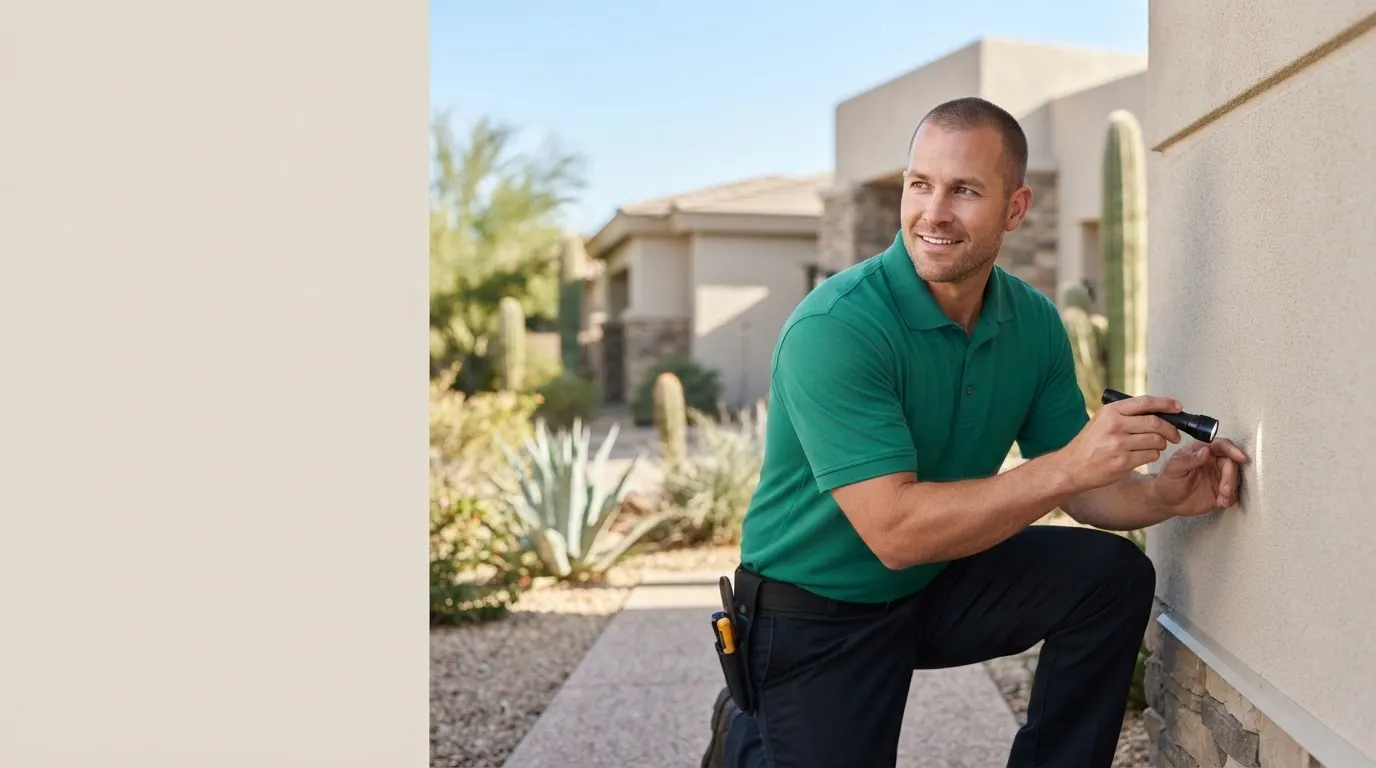
Pest control service in Scottsdale is an engineered structural and biological defense protocol that seals micro-entry apertures, fortifies perimeter soil and stem walls, and neutralizes venomous desert species across Maricopa County residences.
Every service reflects the same meticulous attention to detail, whether it's a single job or a larger pest control sevice project across Scottsdale.
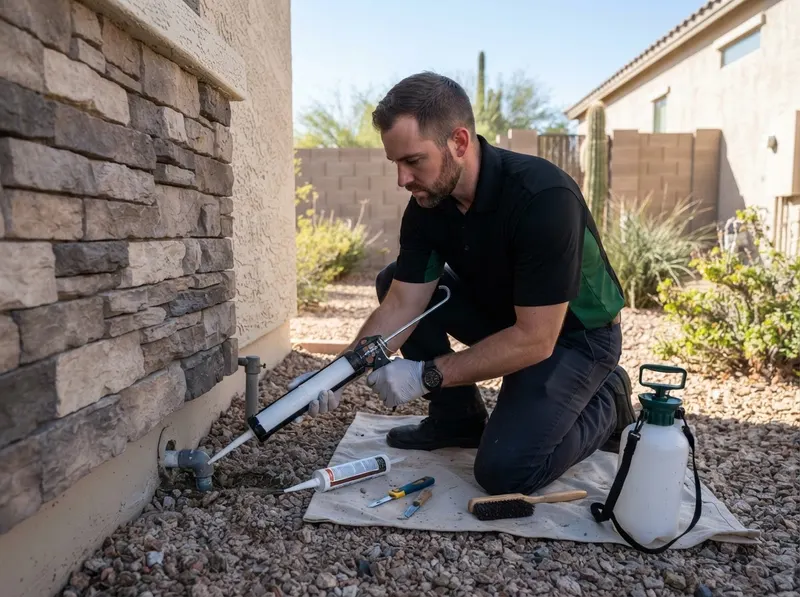
Arizona bark scorpions possess dorsoventrally flattened anatomy, permitting entry through structural gaps measuring a mere 1/16 of an inch. Our defense protocol executes an exhaustive structural diagnostic across the exterior building envelope, examining weep screeds, masonry expansion joints, exterior door thresholds, and plumbing penetrations. Technicians mechanically seal these vulnerable entry points using specialized high-durability elastomeric polyurethanes, custom metal mesh, and copper screening. In the exterior landscape zone, technicians disperse micro-encapsulated synthetic pyrethroid formulations specifically calibrated to withstand desert soil alkalinity and extreme thermal shifts. Treatments extend deep into decorative granite rip-rap, dry-stack travertine retaining walls, and utility boxes to eradicate the primary food web, namely field crickets, desert roaches, and silverfish, that draws scorpions into residential environments. By depriving scorpions of shelter and prey while physically sealing transit corridors, this methodology achieves long-term population suppression without relying on toxic broadcast interior spraying.
Get a quote →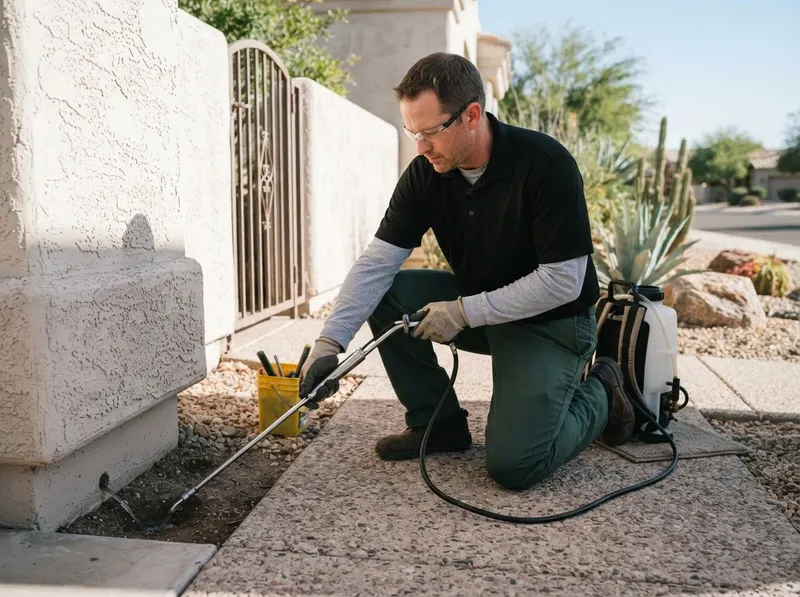
Desert subterranean termites (Heterotermes aureus) forage relentlessly through microscopic foundation fractures, cold joints, and plumbing penetrations seeking cellulose framing. Technicians construct an uninterrupted subterranean barrier using non-repellent liquid termiticides, trenching along the entire exterior stem wall perimeter to a depth of 6 inches and injecting product into underlying soil strata. For homes built on monolithic post-tension concrete slabs, technicians perform precision horizontal rod injection beneath patio slabs, entry walkways, and garage aprons to create an impenetrable continuous chemical zone. Because the active chemistry remains non-detectable to foraging worker termites, insects transfer the lethal compound throughout the entire subterranean colony via mutual grooming and trophallaxis, triggering full colony elimination within sixty to ninety days. Every installation includes detailed structural mapping, visual crawlspace checks, and the installation of low-profile exterior monitoring stations along high-moisture perimeter turf transitions.
Get a quote →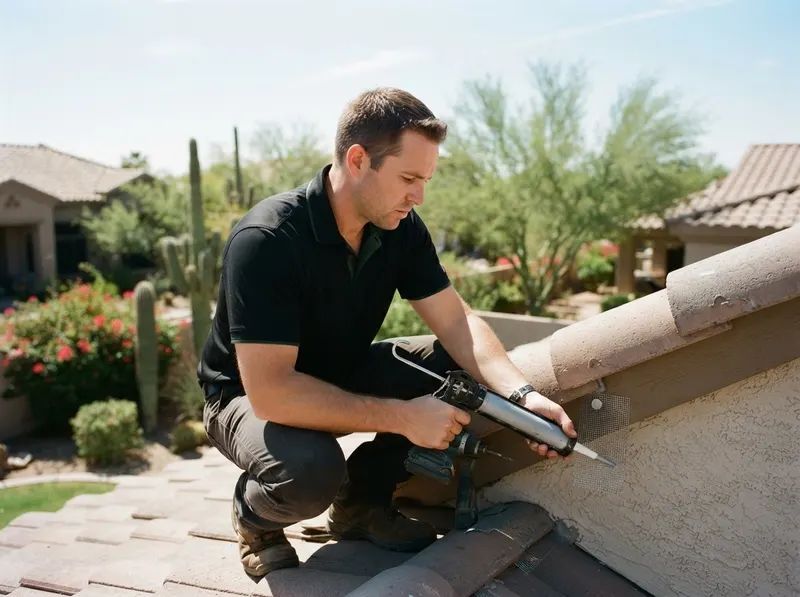
Scottsdale residential architecture, characterized by clay S-tile roofs, expansive covered verandas, and dense decorative citrus groves, provides ideal arboreal pathways for roof rats (Rattus rattus). Our structural exclusion protocol seals every elevated vulnerability from ground level to the roof ridge. Technicians install custom-fitted galvanized steel hardware cloth (1/4-inch mesh) behind tile pan eave openings, seal plumbing vent stacks with heavy-duty lead sleeves, and flash architectural dormers to block attic access completely. Within interior attic spaces, specialists deploy targeted mechanical trapping grids to extract existing populations rapidly without using interior poison baits that result in foul odors within wall cavities. Additionally, technicians conduct full vegetation clearance assessments, documenting overhanging tree limbs within 4 feet of the roofline to eliminate natural rodent jumping platforms and systematically shut down exterior entry points across the upper building envelope.
Get a quote →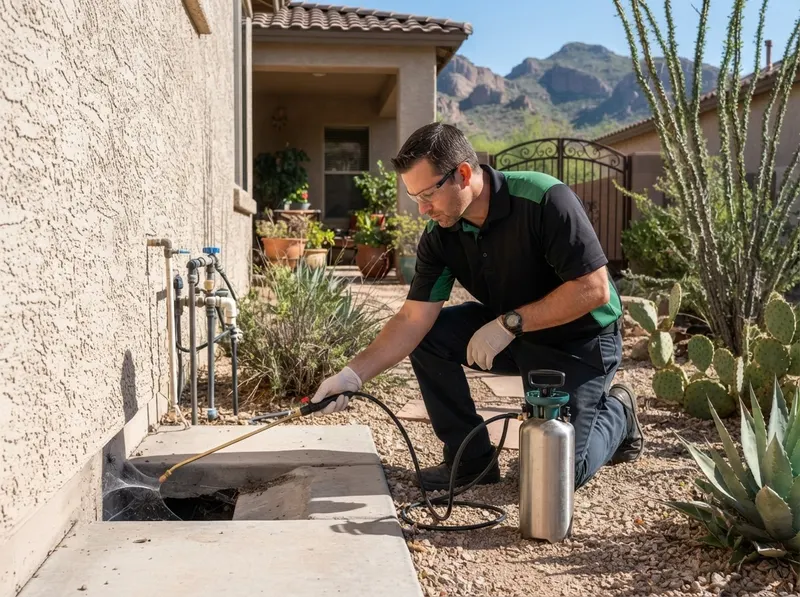
Western black widows (Latrodectus hesperus) and desert brown spiders thrive across arid Maricopa County landscapes, selecting dark, low-disturbance environments such as irrigation control valve boxes, pool equipment pads, exterior stucco offsets, and covered outdoor kitchens. Our specialized abatement program begins with systematic mechanical de-webbing using specialized extension brushes to clear egg sacs, active webs, and structural overhangs. Technicians inject residual micro-crystalline formulations directly into subterranean voids, cinder block wall cavities, and weep holes where spiders harbor during daylight hours. Because spiders do not groom their limbs like traditional insects, standard topical floor applications frequently fail; our technicians apply micro-encapsulated formulations with extended electrostatic cling properties to ensure lethal contact as arachnids traverse vertical stucco and block surfaces. Ongoing exterior barrier treatments suppress secondary insect species, eliminating the food sources required to support sustained arachnid colonies.
Get a quote →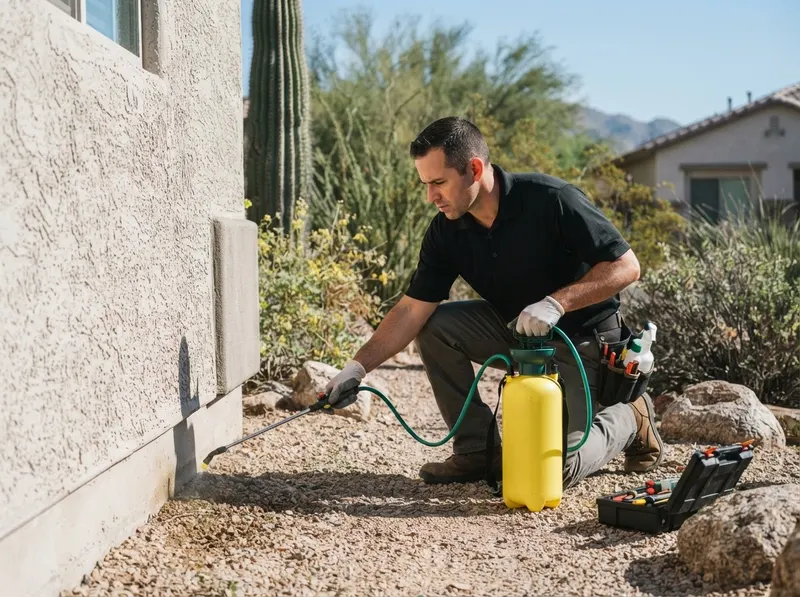
The continuous Desert Perimeter Defense System creates an active defensive zone extending up to 10 feet out from the residential foundation wall and 3 feet up the vertical stucco face. This multifaceted barrier targets ground-dwelling desert pests before they can reach exterior doors, windows, and weep screeds. Technicians disperse water-activated granular deterrents across decorative granite boundaries and install high-adhesion liquid barrier films around patio perimeters, garage thresholds, and outdoor utility hookups. This chemical barrier demonstrates exceptional photostability, resisting rapid breakdown under intense Sonoran Desert ultraviolet radiation and surface temperatures exceeding 140 degrees Fahrenheit. The system provides superior control over invasive desert cockroaches, sewer roaches, crickets, ground beetles, and blister beetles, neutralizing native insects at the exterior boundary line and preventing the indoor migrations commonly observed during extreme seasonal temperature shifts.
Get a quote →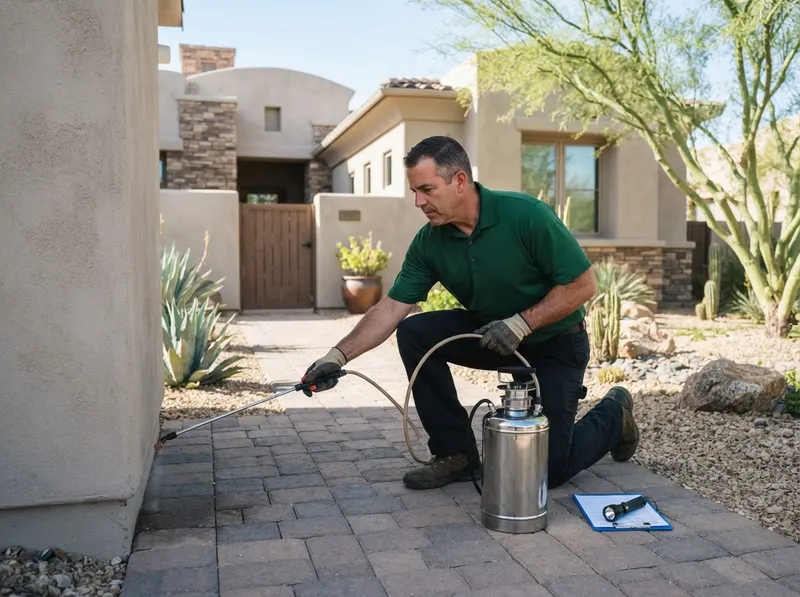
High-end boutique resorts, executive commercial suites, and luxury short-term vacation rentals require discrete, highly reliable pest exclusion protocols that protect property reputation and guest reviews. Our specialized defense program operates around variable guest turnover schedules, providing high-efficiency exterior barrier renewals and non-invasive exterior inspections between standard check-out and check-in windows. We deliver complete digital documentation, date-stamped exterior treatment logs, and detailed structural vulnerability reports after every service visit. In addition to standard venomous pest defense, our technicians implement preventive monitoring arrays for stored product pests, drain flies, and localized bed bug risks, ensuring immediate resolution before issues can impact guest satisfaction or online booking metrics. Service vehicles maintain a discrete profile, and all physical exclusion work is color-matched to architectural masonry and stucco finishes to preserve the property aesthetic.
Get a quote →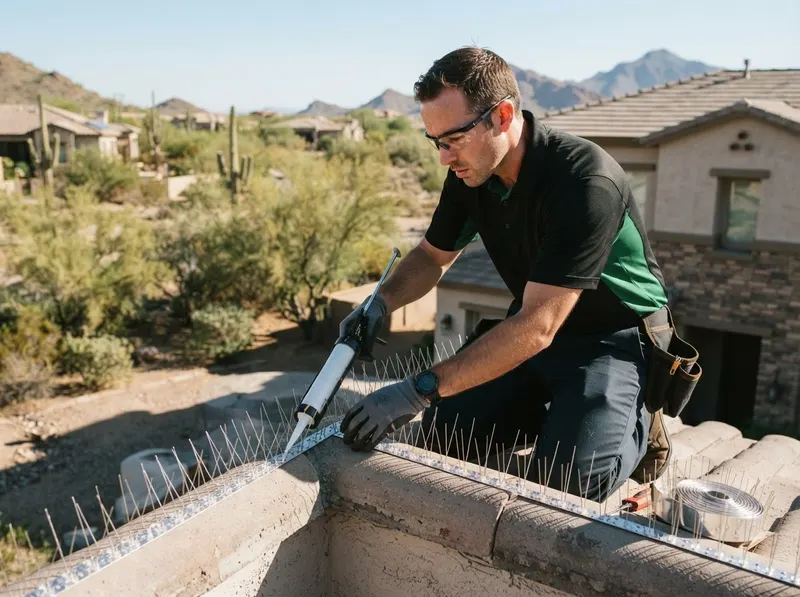
Feral pigeons (Columba livia) cause severe aesthetic and structural degradation to Scottsdale residences by roosting beneath rooftop solar panel arrays, under Spanish tile eaves, and along covered patio beams. Their acidic droppings erode building materials, clog roof drainage channels, and introduce parasitic bird mites into living areas. Our specialized deterrent service installs heavy-duty, UV-stabilized mesh barriers around solar arrays, completely blocking access to the sheltered voids underneath panels without voiding manufacturer roof or equipment warranties. Along exposed roof ridges, parapet ledges, and architectural beams, technicians install low-profile stainless steel spike strips, tensioned bird wire systems, or electrified deterrent tracks that discourage perching without causing physical harm to the birds. All roosting areas are cleaned, sanitized, and treated with specialized deodorizing agents to eliminate pheromone scent trails that attract migrating flocks back to the structure.
Get a quote →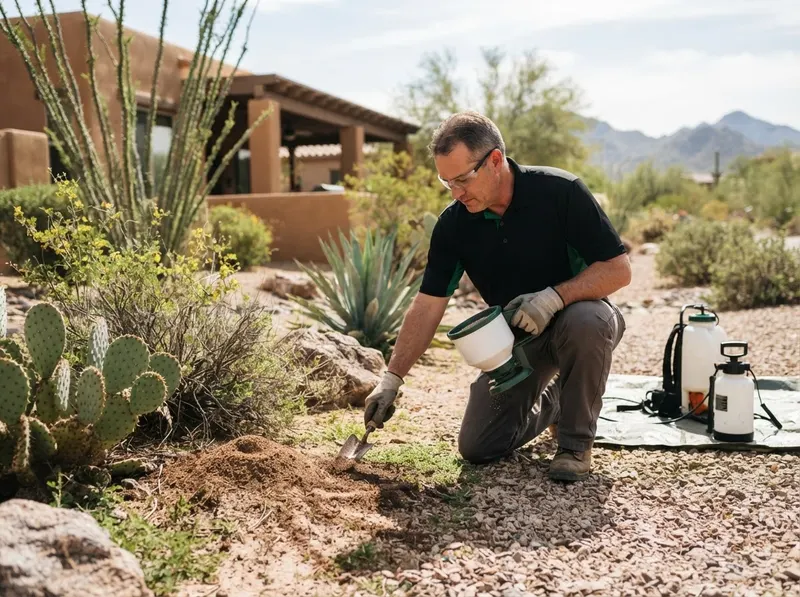
Sonoran Desert properties frequently contend with native harvester ants and invasive southern fire ants that construct extensive subterranean mounds across landscape turf, desert gravel expanses, and paver walkways. These stinging insects present direct health hazards to domestic pets and children while undermining paver base materials through soil displacement. Our ant defense protocol avoids superficial surface sprays, which cause colonies to fracture and spread into adjacent landscape zones. Instead, technicians utilize targeted, slow-acting biological protein and carbohydrate bait matrices that foraging workers carry deep into the subterranean nesting chambers to eliminate the reproductive queen. For persistent fire ant mounds along lawn edges and pool decking, technicians apply direct non-repellent drench treatments to eliminate the colony core, followed by a wide-radius granular growth regulator treatment that prevents new satellite colonies from establishing within property lines.
Get a quote →You get a firm, itemized quote for your pest control sevice before any work begins, no surprises, no pressure.
Careful prep, tidy work, and a full cleanup when we are done. We treat your home and belongings like our own.
The same trusted, background-checked team from the first call to the final check.
If a residence experiences recurring indoor encounters with Arizona bark scorpions or southern black widows, choose a comprehensive physical micro-exclusion and exterior perimeter barrier program. If an architectural structure exhibits continuous mud shelter tubes tracking up concrete stem walls, choose targeted subterranean liquid soil termiticide trenching or targeted sub-slab void injection. If nocturnal scurrying, scratching, or insulation displacement occurs within ceiling spaces between November and February, select structural rodent proofing, tile roof pan flashing, and attic extraction using galvanized steel hardware mesh.
If landscape beds, decorative paver patios, and block boundary fences harbor swarms of subterranean roaches or crickets, select a dual-ring exterior perimeter barrier application targeting exterior nesting zones. The foundational operational trade-off centers on upfront physical sealing labor versus recurring surface chemical maintenance: structural exclusion requires meticulous mechanical alterations, specialized masonry sealants, and custom metal flashing that permanently shut down physical transit corridors, whereas chemical surface treatments demand strict bi-monthly reapplications to withstand intense Sonoran Desert ultraviolet photodegradation and 115-degree ground temperatures. Homeowners seeking absolute interior zero-tolerance protection typically integrate both disciplines: structural mechanical exclusion seals the physical home envelope permanently, while a sixty-day exterior perimeter chemical barrier stops migrating desert vectors before they populate patio perimeters, exterior lighting fixtures, and outdoor entertainment kitchens.
Every project gets a firm, written price after a free on-site visit. Ranges below for orientation.
Tell us about your pest control sevice job and we'll send a clear, written quote, usually the same day. Or just call and talk to a real Scottsdale pro.
(520) 652-3807
Scottsdale possesses unique geographic and ecological dynamics due to its immediate proximity to the McDowell Sonoran Preserve, where natural desert drainage channels and protected boulder habitats funnel venomous wildlife directly toward adjacent residential neighborhoods. Prolonged summer heat exceeding 110 degrees Fahrenheit triggers intense thermal breakdown of standard consumer-grade insecticides within 48 to 72 hours, necessitating the use of specialized micro-encapsulated polymers engineered specifically for high-alkalinity caliche soils. Communities situated near landmarks like Taliesin West, Pinnacle Peak Park, and WestWorld experience notable seasonal surges: summer monsoon rainstorms between July and August cause massive subterranean termite swarms and drive bark scorpions from dry-wash riverbeds into exterior perimeter weep screeds, while late autumn temperature drops across McDowell Mountain corridors prompt roof rats to migrate out of mature palm canopies into residential attic insulation. Maintaining defensible exterior perimeters across north and south Scottsdale properties demands a continuous, structurally grounded defense designed specifically around Sonoran Desert ecological patterns.
Free estimates for Scottsdale & the surrounding area.
 Torvani Pest Defense